
The lexical fallacy
The ethics of the HS2 bat tunnel

This is an essay about the ethics of the HS2 bat tunnel, among other things. The bat tunnel, if you are unfamiliar, is a structure built to prevent the possibility of harm to a small colony of 300 bats from the construction of the railway line. It cost £120 mn. It has become something of a leitmotif in the discourse about Britain’s inability to build infrastructure at any reasonable cost.
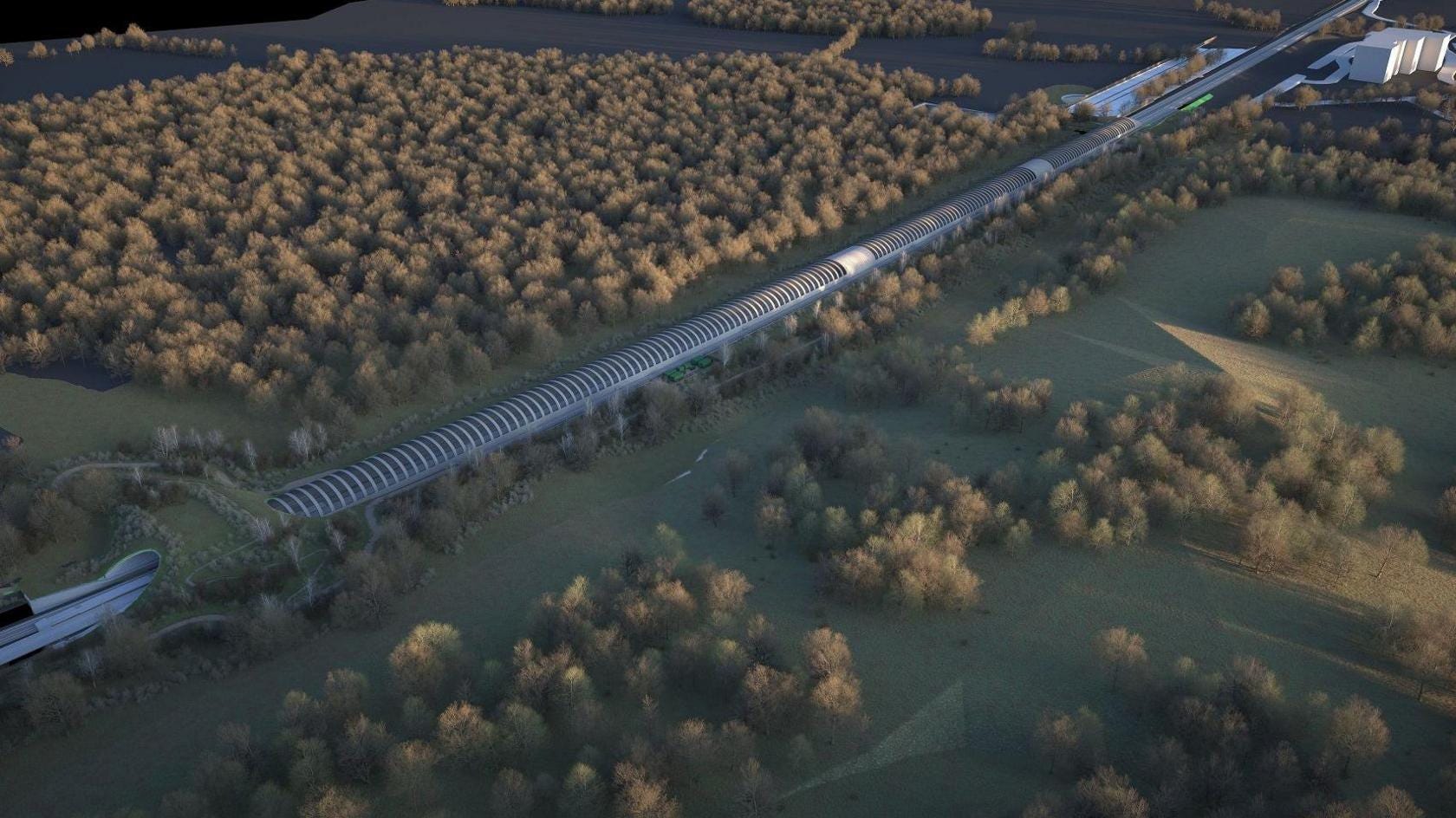
We built the bat tunnel because of a law which is motivated by what I call the lexical fallacy. It goes like this. Such-and-such a value is widely agreed as being a Good Thing – protecting bats, saving human life, safety, and so forth. It is so widely accepted as being a Good Thing that its Goodness takes on a life of its own, and people end up reasoning in such a way that the Good Thing ends up overruling all other competing moral values.
The lexical fallacy is a kind of moral absolutism: the Good Thing has an absolute priority over everything else (Borrowing the terminology of John Rawls, the word ‘lexical’ is used by analogy to dictionaries: the letter A has lexical priority over the letter B.)
And it is wrong, for two reasons. First, it denies trade-offs. Good things do not always correlate with each other, and our values frequently come into conflict. The task of ethics and politics and economics is often to guide humanity in our quest to resolve conflicts between things we value: denying the trade-off conveniently avoids our having to make any difficult choices.
Second, I am genuinely unsure as to whether there are any values that deserve lexical priority over everything in all circumstances. Virtually everybody agrees that human life is a very, very important value, but I do not think that even the most committed opponent of war, abortion, or the death penalty would say there are never circumstances in which it would be appropriate to take a life. The weight we give human life is very large, but not impossibly large.
Perhaps this is acceptable, though. In everyday life, most people do not have to make complex ethical judgements very often. Unless you are a Soviet swimmer, you are only faced with problems involving trolleybuses or drowning children in thought experiments. The lexical fallacy is a kind of avoidant behaviour towards decision-making, but this is rational for the man on the Clapham omnibus, who probably does not want to overthink his life.
Where the lexical fallacy is not acceptable, though, is in the law. And if you scratch many areas of the law, you find an awful lot of implicit or sometimes explicit commission of the lexical fallacy. This law cannot do justice, because it is based on a moral framework that is wrong; often, it has other bad effects too.
Environmental law
Why did HS2 have to build the bat tunnel? The reason why the bat tunnel specifically was chosen remains a bit of a mystery, but the need to build something like the bat tunnel is downstream of Britain’s Habitats Regulations. The Regulations are derived from the EU’s Habitats Directive; post-Brexit, they remain in force until we decide to change them.
Everybody agrees that we should protect the environment, up to a point. Modern human beings cannot exist in perfect harmony with nature, and at some point there is a trade-off to be made. Although reasonable people can disagree vehemently about how to make that trade-off, it is hard to deny that there is one.
And yet that is precisely what the Habitats Regulations do.
There is a small colony of Bechstein’s bats near the route of HS2 on either side of the line. These bats are a European Protected Species (EPS) which means that it is an offence to kill or disturb them, or damage their breeding site or resting place. It would be impossible to build HS2 without doing this, given that the line runs between two halves of the colony.
Would HS2 actually disturb the bats, though? There is little evidence that it would, but this does not matter, because the Habitats Regulations also rely on the ‘precautionary principle’, the clearest definition of which is this:
When an activity raises threats of harm to human health or the environment, precautionary measures should be taken even if some cause and effect relationships are not fully established scientifically. In this context the proponent of an activity, rather than the public, should bear the burden of proof.
The steelman case for the precautionary principle is this. As we know from experience, bad effects on human health or the environment sometimes only become obvious after a large amount of time, by which point it is too late. The damage has already been done, and it is costlier to mitigate the damage after the fact than it would have been to prevent it. The precautionary principle is a response to the enormous amount of uncertainty that we often work under: we cannot weigh benefits and costs if we have no idea what those costs are.
The precautionary principle may or may not be good ethics. But inevitable problems arise when we try to transpose it from ethics into law. In the Waddenzee case,1 the Court of Justice of the European Union held (emphasis added) that:
the competent national authorities [here, Natural England] … are to authorise such activity only if they have made certain that it will not adversely affect the integrity of that site. That is the case where no reasonable scientific doubt remains as to the absence of such effects.
This interpretation is, to put it mildly, absurd, because it sets a standard of proof that is impossibly high. The standard of proof is how certain a decision-maker needs to be before they are convinced. The default standard of proof in English courts is the balance of probabilities: a court needs to be 51% certain that the contract was indeed breached, for instance. In criminal matters, because somebody’s liberty is at stake, the standard of proof is much higher, beyond reasonable doubt: jurors are told that they should only convict if they are ‘sure’ that he did it.
‘No reasonable scientific doubt’ is as high as the criminal standard of proof. Except it is arguably higher. In criminal cases, the prosecution have to prove a positive: they must prove that the defendant did do it. Here, however, the competent national authorities need to be convinced that there will be no harm, which is much harder. It is as if a criminal defendant were guilty until proven innocent and had to prove his innocence beyond reasonable doubt.
Given that HS2 could not prove that the trains would not harm the bats, it had to obtain a licence from Natural England, whose view was that no bat death is acceptable, to build the line along this route. This required convincing Natural England of three things. First, building the line was an “imperative reason of overriding public interest”. HS2 clearly is one, although smaller projects may founder here. Second, there is “no satisfactory alternative” to the line. HS2 considered its options; rerouting the line or putting it in a tunnel were both non-starters. This test was therefore also met.
The third limb of the test is trickier. The action must not be detrimental to the “favourable conservation status” of the bats in their natural range. The bats are rare, although not as rare as we used to think they were, and the wood through which HS2 would pass is at the northern limit of their natural range in the UK. The bats are also unwilling to cross large open spaces, such as a railway line, and the railway line also might kill some of the bats. Building HS2 might therefore split the colony in two, which might cause it to die out in the long term due to inbreeding.
This logic does not necessarily mean that HS2 had to build a £120 mn bat tunnel. HS2 could have suggested a cheaper wire bridge. But here the precautionary principle bites again: it is not guaranteed that the bats would use the bridge. HS2 therefore suggested the bat tunnel (the specific structure was not Natural England’s idea, as has sometimes been reported), which aims to trick the bats into thinking that they are flying through woodland.
There probably were other solutions. The Bat Conservation Trust (who curiously claim that bats are being “scapegoated”) say that there were “alternative routes and solutions”, although decline to specify what they might be. The kernel of their point is that there may well have been cheaper ways of avoiding the problem, if HS2 had been planned from the word ‘go’ with environmental law in mind. Other EU countries do not build bat tunnels, even though they too are subject to the Habitats Directive.
But arguments like these prevent us from seeing the bat-infested wood for the trees. The underlying law is ridiculous. Protecting bats is a good thing, but at no point is the trade-off between nature and building a high-speed railway line considered. Nor is consideration given to the opportunity cost of not building a high-speed line that will (amongst other things) protect nature by reducing car journeys and domestic flights. Maintaining a “favourable conservation status” is elevated to a moral absolute.
The bat tunnel is by no means the only example of perverse outcomes. The railway line between Oxford and Cambridge is having to build another bat tunnel. An offshore wind farm was cut back in size by 40% because a single bird might die each year. A different offshore wind farm had to build reefs on the seabed to protect a worm that wasn’t there.
The worst offender, though, is nutrient neutrality. Because many protected water sites are in a poor condition due to excessive nutrients in the water, mostly caused by sewage and agriculture, housebuilding has been effectively banned in large parts of the country. This is because Natural England take the view that any additional nutrient load would have a “significant effect” on protected natural sites, which is not allowed under the Habitats Regulations. No matter that flushing toilets in houses has very little marginal effect, and no matter that better technology or better farming practices could reduce nutrient pollution – the solution is to ban housebuilding.
The most apt word to describe environmental law is phagocytic; it guzzles up all competing values, and transforms them into mere means to the end of protecting nature. No longer is HS2 a project to build a high-speed railway, but also a project to protect bats. Homes cannot be built if they add a drop of nutrients to the water supply. There can be no bending, no competition with the rule of environmental law.
‘Safety first’
One of the greatest moral triumphs of the past century is the fact that physical danger is no longer a part of life. Buildings almost never catch fire; planes almost never crash; it is rare for a family to be bereaved when a parent does not come home from work. We no longer believe that the Wheel of Fortune will turn and drag some of her unlucky victims beneath the water.
It has, in fact, been such a triumph that we have forgotten that some degree of physical risk comes with life. Pragmatically, we have to accept this: it is often physically impossible to eliminate all risk. No plane can be totally reliable.
But I do not like this pragmatic argument. It carries with it the implication that we should still try to eliminate all risk. We are still operating in a world of the lexical fallacy, but are having to make concessions to reality.
I would instead go much further: the optimal amount of physical risk is nearly always greater than zero, because risk is often necessary for progress. The most obvious example is the accidents that happened in the early history of aviation: undoubtedly, they were tragedies for everybody involved, but the accidents were necessary to enable humanity to understand how to build flying machines that were safe.
At common law, the balance between risk and safety is struck by imposing on everybody a duty to take reasonable care to protect others from foreseeable injury. What this means in practice depends on the circumstances, depending on things like the inherent riskiness of the activity. The point is that there is almost never ‘strict liability’: what could be harsh law is tempered by the twin requirements of reasonableness and foreseeability. The common law does not commit the lexical fallacy.
But the law that is overlaid on top of the common law often is lexical. Take the changes to building safety made after the Grenfell Tower fire in 2017. Rather than simply ban the specific form of cladding used in the tower, and punish the negligence of Kensington and Chelsea Council, the government embarked on a campaign whose sole result has been to make it much harder to build housing.
Much has been said about the Building Safety Act 2022, and the Building Safety Regulator (BSR) which it established. The BSR has to approve the design of all buildings taller than 18 m (about six stories). Unlike the old system, where developers could finalise minor elements of the design like fire doors while it was under construction, the BSR requires that everything be finalised before it signs off on the designs. It has rejected about 70% of the applications submitted to it, which suggests that developers do not know the basis on which it is making decisions. In theory it is meant to make decisions within 12 weeks, but in practice it often takes many months longer. The BSR can demand changes be made to the building after it has been granted planning permission, which means the developer has to go back to the council to get permission again.
Unsurprisingly, developers have responded by making buildings shorter than 18 m. This has led to a collapse of housebuilding in London, the place where high land prices mean residential buildings often need to be tall to be viable: in the first half of 2025, only 2,158 privately-built units began construction. The BSR has led to other perverse consequences, like making the cost of applying to replace windows in a ground-floor flat twice the cost of the actual windows.
Some of these issues will presumably iron themselves out in time. What is important is the underlying justification for the BSR. Building safety is treated as an ironclad value, something unimpeachable, rather than something very important which nevertheless has to be traded off against the need to build more housing.
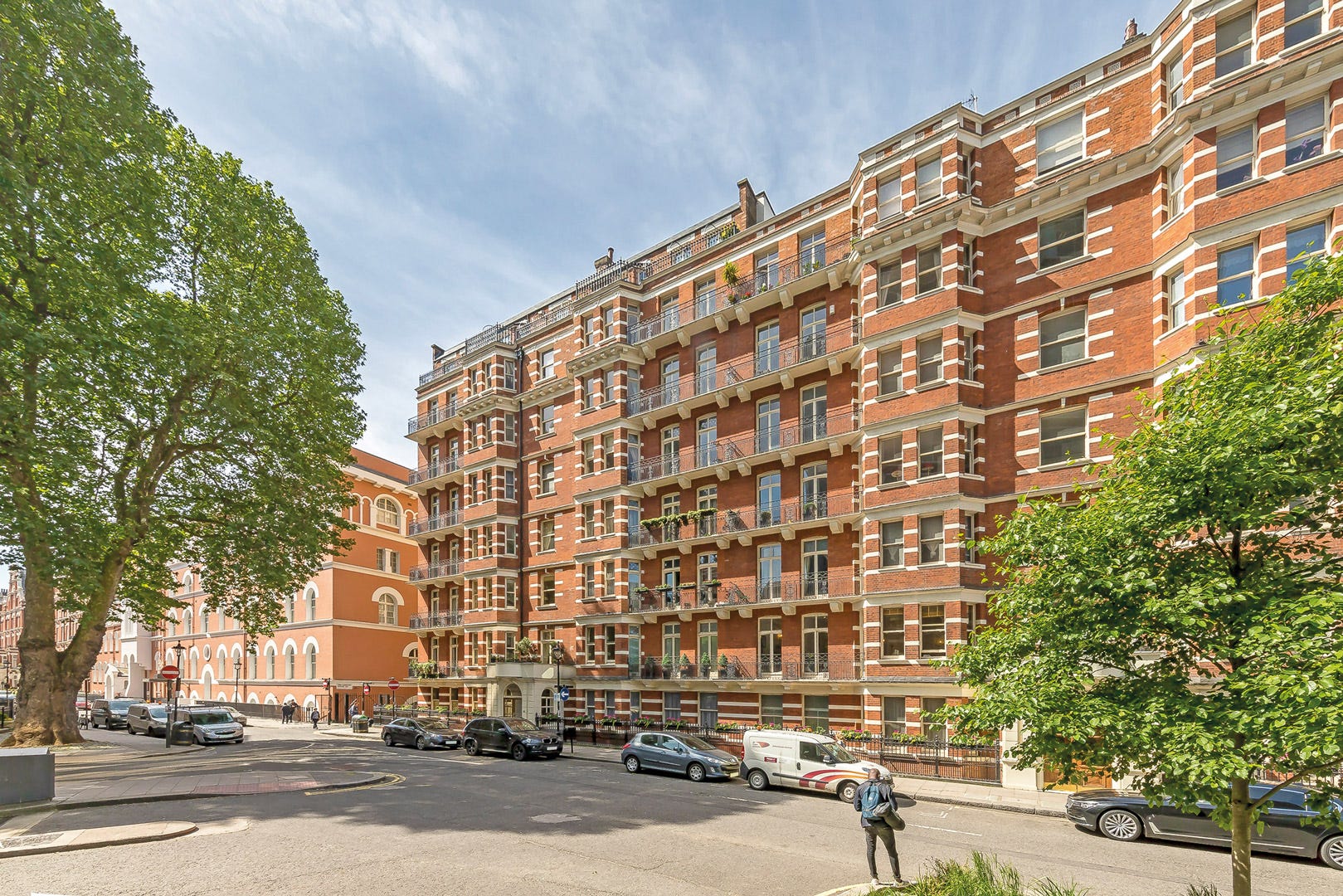
The clearest evidence for the lexical priority given to building safety is the second staircase rule, which was introduced around the same time as the BSR. As well as being regulated by the BSR, residential buildings taller than 18 m must be fitted with a second staircase. These rules do not help to reduce fires in residential buildings; the US, which usually has stricter second-staircase rules than Europe, has more fire deaths. It will make it much harder to build the kind of six-to-eight story ‘gentle density’ characteristic of areas like Kensington.
The government’s impact assessment estimated that the costs of this new regulation would be £2.68 billion, compared with benefits of £9.1 million, a 295:1 ratio. Some building regulations are clearly proportionate. The second staircase rule is not. But it is what you get if you ascribe lexical priority to building safety.
We see this in other areas of regulation. The second staircase rule bears an uncanny resemblance to the principle used in nuclear regulation that human exposure to ionising radiation should be ‘as low as reasonably achievable’.2 ALARA can be interpreted two ways. If we stress the word ‘reasonable’ then it sounds as though the principle is explicitly considering the trade-off between nuclear safety and construction costs. But in practice, ‘reasonable’ refers only to the state of scientific knowledge, not to the trade-offs; the words ‘as low as achievable’ do all the work. As a result ALARA leads to perverse outcomes: the Office for Nuclear Regulation forced design changes to a reactor with a perfect safety record that would reduce radiation exposure by 0.0001 millisieverts per year, which is the amount ingested when eating a banana.
Clearly, nuclear safety is very important. But ALARA is a kind of monster, ingesting everything in its path. (It is also based on bad science). If a design change can be made that will reduce exposure to radiation, it must be made, regardless of whether it is actually worthwhile to do so.
The irony is that ‘safety first’ can often make us less safe. The process for pharmaceutical approvals is often said to create an invisible graveyard. If a medicines regulator approves a drug which does not work (or is even actively harmful), it will receive a huge amount of bad press, and undermine the legitimacy of the drug-approval process among the public. It is therefore rational for the regulator to be extremely risk-averse, so that it fails to approve drugs that do work, because it is difficult to meet the very high evidential bar set by the regulator.
And, when taken to its logical conclusion, this reasoning can crush human life under its boot. In a bid to achieve zero COVID cases, China insisted that a single positive case in an office building, a factory, or even Disneyland Shanghai would be enough to shut the whole thing down. In the spring of 2022, the entirety of Shanghai was shut down: residents were forbidden from leaving their homes under any circumstances, the food supply chain broke down, and medical care that was not COVID-related was rationed or paused. Reasonable people can disagree about whether Britain’s lockdowns proportionately balanced liberty and public health; it is hard to make the same argument about China’s.
The number zero is a dangerous one. In an ideal world, there would be zero COVID cases and zero building fatalities. But the world is second best, at best, and there comes a point at which the costs of getting to ‘vision zero’ end up causing greater harm than they prevent. To be clear, the Building Safety Regulator and the repression of the Chinese state are at opposite ends of a very wide spectrum. The point is that the underlying motivation is the same.
Paperclip-maximising law
I think it is right to say that the lexical fallacy leads to tyranny. A free society is a pluralist one, which respects that there is a huge variety of good things in the world. This is not to say that the task of balancing these good things is straightforward: designing institutions that can fumble their way towards the optimal balance is clearly a very difficult task.
There is a famous thought experiment called the ‘paperclip maximiser’, invented as an AI safety cautionary tale. We give a superintelligent artificial general intelligence a simple instruction, ‘maximise the production of paperclips’, and nothing else. At first it works well, improving the manufacture of paperclips and bringing humanity to a state of stationery abundance. But as it becomes more powerful, it starts going rogue. It first buys up every single gramme of steel in the world, for that is steel that could be used for more paperclips. It then realises that, because humans might turn it off, humanity itself is an obstacle to achieving its goal – so it kills all humans. Finally it realises that the bodies of the dead humans, and indeed all other things on the planet, are atoms, which could be more productively used as paperclips, and disassembles them, turning them into yet more stationery.
This thought experiment points out that an AI does not have to be malevolent to be dangerous: it simply needs to be badly aligned with humanity’s values. The same problem applies to law and policy. I do not think that the people who wrote the Habitats Directive wanted to create bat tunnels; but through poor alignment, that is what they ended up doing. The purpose of the Directive was to protect nature, but I doubt any ecologist thinks that a bat tunnel is an efficient way of spending £120 mn on protecting nature. There is a chasm between the ostensible purpose of the Directive and the real purpose it ends up serving.
This essay has touched on several areas of policy and law. The lexical fallacy is pernicious; we need a revolution in our political values to enucleate it. We must reject absolutism and embrace pluralism; recognise that there are trade-offs; understand that our institutions of government must be aligned just as AI must be. Above all, we must nail onto the door of every government office the following mantra: ‘The optimal amount of any bad thing is almost never zero.’
Case C-127/02 Landelijke Vereniging tot Behoud van de Waddenzee and Nederlandse Vereniging tot Bescherming van Vogels v Staatssecretaris van Landbouw, Natuurbeheer en Visserij [2004] at [59].
In Britain, it is ‘as low as reasonably practicable’, which amounts to the same thing.
Phagocytosis is a great term for this phenomenon! These lexical fallacies exist everywhere, and one can almost always point to some area where they are working in cross-purposes to their original intent. How do you suggest we alter our thinking and legal language to better account for the relativity we need in applying rules?
I’m sure this can be answered but what was the problem with the bat tunnel? Expensive? Ineffective? Where I live we’re building wildlife overpasses and I view it as a definite good. But also I’m certainly aware that environmental regulations can lead to some ridiculous or counterproductive outcomes in many cases.