
How trust funds made the modern world
In progress we trust

Trust funds do not have a good reputation. The ‘trust fund baby’ is the child of a wealthy family whose lavish lifestyle is funded by their parents’ money. As well as the super-wealthy, trusts are associated with tax avoidance, offshore financial centres, and shadowy, complex chains of ownership of assets.
In fact, trusts are everywhere. In the parts of the world which use law derived from English law, they are as important a legal concept as contracts or negligence. Nearly all shares in Britain are traded on the basis of trusts. Every home jointly owned by a couple involves a trust. They play just as important a role in America, Australia, Canada, Ireland, Hong Kong and Singapore, whose legal systems are also derived from English law.
For much of their history, trusts have been an instrument of social and economic progress. They allowed married women to own property when the rest of the law prohibited it. England’s rich tradition of clubs and societies owes its origins to the institution of the trust, which enabled much greater freedom of association in the early modern and industrial period than in other European countries. The London Stock Exchange and the insurance marketplace Lloyd’s were both originally trusts.
But trusts are not native to the law of France, or Germany, or Japan, or of any legal system which is not derived from English law. Trusts arose almost by accident. For centuries the trust enabled people, through legal trickery, to avoid bad laws that were holding back progress. In the words of English legal historian FW Maitland, it enabled the country to “enter into one large conspiracy to evade its own laws, to evade laws which it has not the courage to reform”.
For a large part of its history, England had two parallel court systems: the ordinary common law courts, and the courts of equity. The courts of equity existed to mitigate the harshness of the common law, which had ossified into myopic proceduralism that often worked injustice. It was in those courts of equity that the institution of the trust was created, initially to enable people to pass on assets at a time when will-making was severely restricted.
There is a wider lesson here for fixing broken systems of regulation. Rather than try to reform the common law system, the answer in medieval England was to set up a parallel system of justice. Over time, the trust was used to experiment with sidestepping aspects of the law which were holding back progress. Once the old law was almost irrelevant, in wills, the property of married, wealthy women, and associations, it was finally reformed to catch up, normalising a practice which had previously used trusts.
What is a trust?
A trust allows an asset to have two owners. There is the legal owner, known as the trustee, who holds the formal, legal title to the asset. But there is also the beneficiary, for whose benefit the asset is held, and who is entitled to the proceeds of the trust. The trustee controls how the asset is used: subject to the terms of the trust, they can sell it, lease it, or deal with it how they like. The trustee is subject to strict duties both to act within the terms of the trust, and to act with single-minded loyalty to the beneficiary, who can sue them if they breach their duties.
As we shall see, the trust is an extremely flexible concept. A court will often find that property is being held on trust, even if nobody intended to set one up, if it enables the court to remedy some injustice relating to property.
This separation of ownership and control has its origins in the medieval period.1 English law was unusually well developed by the standards of Europe: in the time of Henry II, who reigned 1154–1189, it was centralised into a single system, focused around the King and his professional judges who travelled around the country. This was good for the King, for whom dispensing justice was a source of revenue. It also helped him to keep the peace: Henry had come to the throne in the aftermath of the Anarchy, a nineteen-year civil war between King Stephen and Henry’s mother, Matilda.
Centralised law was also beneficial for litigants, for whom the King’s justice was superior justice. It was harder to bribe a professional judge than a local notable, and rather than trial by battle, or trial by ordeal, legal disputes were resolved by a trial by jury. By the middle of the thirteenth century there was a legal profession, and by the fourteenth century lawyers were being trained in law schools, the Inns of Court, which still exist today.
England’s prodigious development of a unified legal system was rare. In medieval France, justice was dispensed by a muddle of royal, seigneurial, ecclesiastical and municipal jurisdictions, much of it administered by local lords rather than the King. The north of France lived under hundreds of distinct customary laws, while the south followed written law influenced by Roman law. This persisted until the early modern period: the eighteenth-century writer Voltaire famously quipped that a traveller through France changes laws as often as he changes horses. France only acquired a body of unified law in the aftermath of the French Revolution.
England’s system of law came to be known as common law, because it was common to the whole of England. But even though its unification was advantageous, common law developed a problem: it became hidebound by procedure.
Today, it is possible to study English law without thinking about court procedure until one begins to train as a practising lawyer. In the medieval period, however, the procedure was the law. Simplifying somewhat, to bring a claim in court, the plaintiff had to purchase a writ, which stated what he or she was alleging: there were, for instance, separate writs for debt and trespass. But, more than that, the writ determined the procedure that followed, the mode of trial, the defences available, and the remedy.
The choice of writ was vital: the plaintiff would lose if they made the wrong choice. But a plaintiff could not write their own writ: they had to use a formula which already existed. As well as all these possibilities for failing on a technicality, the common law courts refused to make any exceptions to clear rules in individual cases. For instance,2 if a debtor gave a creditor a bond (a piece of paper evidencing the debt), paid up, but forgot to mark the bond so as to indicate its cancellation, then the common law would regard the uncancelled bond as irrefutable evidence that the debt was still outstanding. The debtor would therefore be liable to pay twice.
There was, however, a way around this unjust system. Litigants who could not obtain justice in the ordinary courts could petition the King to grant relief. The King was bound by his coronation oath “to do equal and right justice and discretion in mercy and truth”, which placed him under an obligation to provide justice if the common law courts were deficient. In practice, most of these petitions were dealt with by the Lord Chancellor, who held a role a bit like a modern Prime Minister.
Many of these petitions enabled justice to be done against the wealthy and powerful. In 1393, a man named Henry Glanville petitioned the King complaining about a local knight in the county of Devon, Sir Richard Champernoun. Champernoun sent his servants to seize Glanville, put him in the stocks at Woodleigh, and held him there until he paid a ransom. Glanville alleged in his petition that he dared not live in Devon “for fear of death”. But he was without a remedy, as no one dared bring suit against Champernoun “as the Common Law demands, because of his great maintenance.”3 (In the end, it turned out that Glanville’s allegations were “vain and false”.)
These petitions were also used when the rigidity of the common law system worked against the plaintiff, such as in its refusal to enforce trusts. In one case in the 1420s,4 a man named Thomas Empole left his manor to trustees on strict instructions that it should be transferred to a priory, or be sold and the profits handed over. Nicholas Wychyngham, the last surviving trustee instead sat on the land, took its profits for 26 years, and sold it and pocketed the proceeds. The ordinary courts would have provided no remedy: in the eyes of the common law, the trustees were the owners, and that was the end of the matter. Only by petitioning the King would the priory have access to a remedy.
The institution of the trust, then, developed out of these petitions. By the fourteenth century, deciding these petitions meant the Lord Chancellor had acquired a decidedly judicial function, and his jurisdiction came to be known as the Court of Chancery, which administered a distinct form of law known as equity.
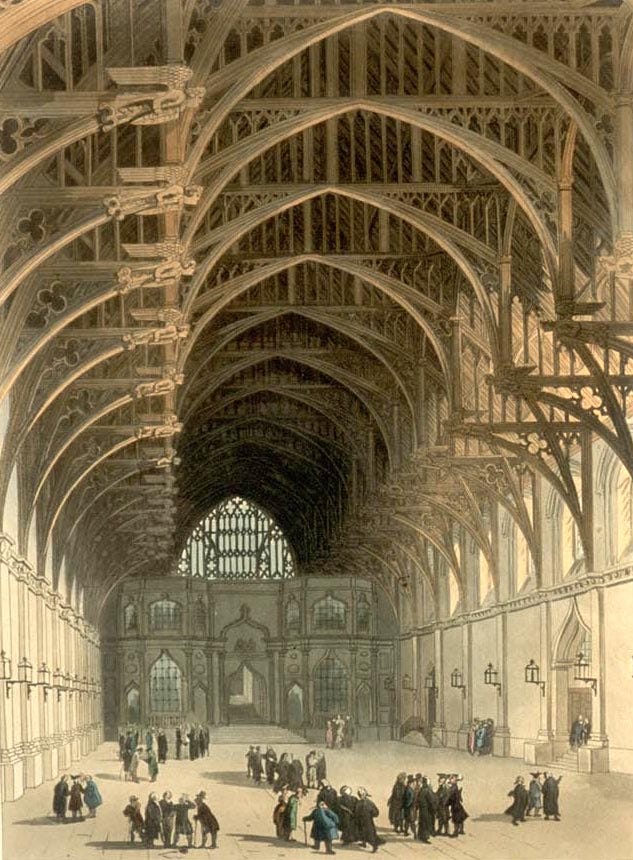
There are no records of the decisions of the Court of Chancery until the mid-sixteenth century, suggesting that Lord Chancellors did not pay very much attention to following the decisions of their predecessors. (By contrast, the reports of common law courts date back to 1268.) Most medieval Lord Chancellors were churchmen, so conscience, good faith and fairness, not procedure, became the standards applied in the Court of Chancery. In the case described above, it was considered to be unconscionable not to recognise the monastery’s claim to the property, even though it had no strict legal title to it.
Using conscience as the standard produced its own problems. As the seventeenth-century legal theorist John Selden once quipped, if the measure of equity was the Lord Chancellor’s conscience, then one might as well make the standard measure of one foot the Lord Chancellor’s foot. This balance between clear, consistent rules and adaptability to the circumstances of the case is a basic trade-off in any system of regulation, whether it be land-use planning or competition enforcement. At scale, it is hard to maintain a fully discretionary system: the volume of cases that came before the Court of Chancery meant it was useful to develop clear rules, and after 1660 reports of Chancery cases were regularly written down.
Equity supplemented the common law, rather than supplanting it: for instance, a contract at common law was also a contract in equity. For over five hundred years, starting in the thirteenth century, there were two competing systems of courts: one administering common law, and another initially doing justice according to the Lord Chancellor’s conscience and eventually administering equity, which took precedence over common law whenever the two came into conflict after 1615.5
The uses of the trust
The first widespread application of the trust (or ‘use’ as it was then called) was for what we would now call estate planning. By the late-twelfth century, land could not be left by will. Instead, on the landowner’s death, land ‘descended’ automatically to the heir, who was usually the eldest son. Younger sons and daughters would receive nothing.
England, at this time, was subject to the so-called feudal system, by which land was held in a set of nested ‘estates’. A landowner, who could more accurately be called a tenant, would be granted land by a lord, usually in exchange for military service; that lord, in turn, was a tenant of a superior lord, and so on, with the King sitting at the apex.
Upon a tenant’s death, his superior lord would receive windfalls, known as ‘incidents’. If the tenant’s heir was a minor, he became a ward of the superior lord, who took the lands and enjoyed their rents and profits for the whole of the ward’s minority, and could sell his hand in marriage. If the heir was of age, he would have to pay a succession payment, fixed at 100 shillings if he was a knight. If the tenant died without heirs, the land would fall back (‘escheat’) to the superior lord.
Landowners, however, found a way around this. The owner of property would transfer his land to some trusted friends, who would allow him to benefit from the land during his lifetime, and dispose of the land in accordance with his wishes on his death. This enabled him to avoid the incidents to the superior lord upon his death, and the restrictions placed on his son. As long as the trustees (or ‘feoffees’ /feˈfiːz/ as they were known) were replaced as they aged, this arrangement would continue indefinitely. The whole arrangement was underpinned by the willingness of the Court of Chancery to enforce these ‘uses’.
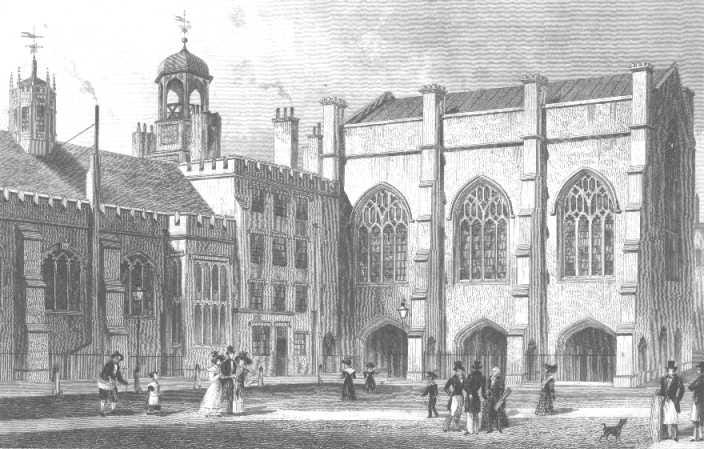
By the late-fourteenth century, a significant proportion of the land in England was held in this way, possibly a majority. This was damaging for the King’s revenue. The King sat at the top of the food chain; one rung below him were the so-called tenants-in-chief, who owed their landholdings directly to him. On the death of a tenant-in-chief, the King had the right to the first year’s profits of his land.
In 1529, Henry VIII tried to negotiate a compromise with landowners: they would keep some power to provide for their families by will, and the Crown would be guaranteed a third of the incidents of their land that were due at common law. But negotiations broke down, and Henry VIII introduced the Statute of Uses in 1536, which attempted to stamp out the practice.
The Statute of Uses was deeply unpopular. As well as reimposing the feudal incidents, it tried to remove testamentary freedom from a society which had grown accustomed to wills. It went much further than necessary: it reimposed the strict rules of inheritance for all tenants, not just those who were of direct concern to the King for revenue-raising purposes. It was one of the causes of the 1536 Pilgrimage of Grace, a Catholic rebellion in the north of England against Henry’s religious policies.
In 1540, Henry capitulated, and introduced the Statute of Wills, which made it possible for landowners to make wills which would be recognised by law, in return for which tenants-in-chief would have to give up a third of their incidents. In other words, the compromise from 1529. Henry found out what many reformers in other times have learned: that using brute force to pull the rug away from people who have grown accustomed to their privileges can provoke a very large backlash.
The Statute of Uses also failed to stamp out the trust. Lawyers found a loophole. In one case,6 a Protestant duchess, who fled to Poland to avoid religious persecution under Mary I, sold her land to a lawyer. If she had transferred the land to the lawyer for her use, then the Statute of Uses would have bitten. Instead, she transferred the land to the lawyer for his use, subject to a secret trust that he would hold the land for her use. This trickery with words, a ‘double use’, which became known as a ‘trust’ to distinguish it from the ordinary use, was enforced by the Court of Chancery.
Following the Statute of Wills, there was no longer any need to use trusts to circumvent the prohibition on will-making. But there were other reasons why landowners wished to use trusts. They might want a trustee to look after the land while the beneficiary was a minor, or for the whole lifetime of a spendthrift son, or to keep the true ownership secret. All of these are still reasons why trusts are used today.
Married women’s property
The trust also enabled married women to hold property. In some respects, medieval English law gave a greater status to women than other systems. In the thirteenth century, unmarried women were not legally dependent on their fathers: they could hold land, make contracts, sue, and be sued in their own right without needing a guardian. Women could inherit land, even land which required the holder to provide military service to the Crown, so long as they sent a tenant from the estate, hired a substitute, or paid ‘scutage’ (shield money) instead. Widows were often made the guardians of their own children, whereas other legal systems barred women from legal guardianship entirely.
But all this changed on marriage. Under the doctrine of ‘coverture’, a married woman’s legal personality was subsumed into that of her husband. On marriage, her personal property was vested in her husband, and she could not acquire any more herself. She could not make a contract, sue or be sued in her own name.
Equity, however, came to the rescue. In the medieval period, trusts were often used to settle property on marriage: the assets of the couple would be transferred to a trust, which would provide use of the estate in life to the husband, a guaranteed inheritance known as an ‘entail’ for the eldest son, portions for the younger children, and a ‘jointure’ which would provide for the woman in widowhood. Many settlements would include ‘pin-money’, which was a sum earmarked for the wife to spend during the marriage, independent of her husband.
This did not, however, protect the wife’s interests sufficiently. Her property was still subsumed into that of her husband. In the seventeenth century, the Court of Chancery developed and enforced the ‘separate use’: the wife’s property would be settled on trustees to the sole and separate use of the wife, keeping it beyond the reach of the husband – and away from his creditors.Among the propertied classes, the use of the marriage settlement became universal; it forms a framing device in Jane Austen’s Pride and Prejudice. Clearly, however, the marriage settlement was inadequate. Poor women had little property, if any, which could form the basis of a marriage settlement. With the coming of the industrial age, and the increased employment opportunities for women, this became a matter of some discontent: a married working-class woman might earn money, but all of it would go to her husband.
Parliament initially acted cautiously, with the Married Women’s Property Act 1870. The 1870 Act did not actually allow women to own property, but extended the concept of the separate use to her earnings. In 1882, this was extended to enable any married woman to own property as if she were unmarried.
There are echoes of the story of wills. In both cases, trusts proved a powerful instrument of social experimentation, which spread from the landed classes down, until eventually Parliament acted with the Statute of Wills 1540 and the Married Women’s Property Acts to normalise what had been common practice for centuries.
Group life
The most important thing that the trust enabled, however, was the ability for a group of people to act as if it were one person in a legal sense.7 Today we are used to this idea. We often speak colloquially of ‘Google’s decision’, which equates with the position of the law: Google can own property, sue and be sued, enter into contracts, and in some cases actually commit crimes. Google has ‘legal personality’, so that even though it is a group of people, the law treats it as though it were a human being. It is therefore called a corporation, from the Latin for ‘body’, a term which refers to any group which has been given legal personality. This need not just be for business purposes: many charities are corporations. Originally, towns and villages were the most common groups to incorporate.
For a long time corporations were viewed with deep suspicion, even outright hostility. An organised, propertied, self-perpetuating corporation with its own rules could be a threat to centralised power: Thomas Hobbes in Leviathan famously described lesser bodies within the state as like “worms in the entrails” of a human being. Because a corporation could never die, land it acquired could never trigger feudal incidents: land held by a corporation was known in England as ‘mortmain’, literally a dead man’s hand in legal French.
The intellectual backing for this hostility was given by Pope Innocent IV, who said that a corporation was a ‘fictitious person’, reasoning that it could not be excommunicated, as it could not sin. It followed that, if a corporation was fictitious, it must exist only at the sufferance of the state, which would of course be able to keep it on a tight leash.
In England, corporations for business purposes were given charters only for risky ventures like trade. Corporations were often the target of the King for repression: between the 1660s and 1680s, two successive Kings took on municipal corporations, including declaring the charter of the City of London forfeit in 1683, a purge which was only reversed after the King was deposed in the Glorious Revolution in 1688.
If this had been the end of the story, then it would have been almost impossible to set up any sort of association. Without sanction from the Crown, it would be impossible for a group to own property, enter into contracts, and sue or be sued. That was the position in most of continental Europe. England, however, had a way around this: the trust, which enabled something called the ‘unincorporated body’. The term is oxymoronic: ‘incorporate’ comes from a Latin word meaning ‘become a body’, so ‘unincorporated body’ means something like ‘unembodied body’. Under this arrangement, the assets of the group are held on trust on behalf of its members: even if the treasurer or executive committee of the organisation has the legal ownership, they must exercise these legal rights on behalf of the members.
Many of England’s most important institutions started as unincorporated bodies. Lloyd’s, the insurance marketplace, created a straightforward market for insurance, and facilitated the massive expansion of England’s trade in the eighteenth and nineteenth centuries. It originated in late seventeenth century London from meetings in Edward Lloyd’s coffee house, where insurance policies were bought and sold, but over time it developed into a society with subscriptions payable by insurers, regulated by rules to enforce a code of behaviour. This worked to the mutual benefit of insurers: even though they were competing against one another, they had a common interest in preventing fraudulent claims, obtaining information about their clients, and preserving public trust. In the eighteenth century, Lloyd’s became a small trust fund and in 1811, the arrangement was formalised with a trust deed that had 1,100 signatures. It was only incorporated by a special Act of Parliament in 1871.
Similarly, the London Stock Exchange was an unincorporated body founded by a collection of stockbrokers who gathered in (another) coffee house. Its rules were set in 1802, and it remained unincorporated until the ‘Big Bang’ deregulation of Britain’s financial industries in 1986. Many of the early building societies, which allowed their members to obtain mortgages easily, were originally based around the trust as well.
This is not to say there were no corporations in England. The state would occasionally charter a corporation for a risky venture, the most famous example being the East India Company, which was originally set up to trade with India, but ended up governing it, with its own private army. No unincorporated association, however, ever managed to exercise such power. In part, there was a latent possibility of competition: insurers did not have to use Lloyd’s, and if Lloyd’s were underperforming, there was always the possibility of creating another society.
Perhaps the most noteworthy use of the unincorporated association, however, was to enable the formation of clubs and associations. In England, no permission was needed to set up a club: indeed, a club could be formed without any formalities and, like Lloyd’s, be formalised with a trust deed later on. Both gentlemen’s clubs in central London and working men’s clubs across the country were unincorporated associations. Political parties, too, used this legal structure: the central organisation of the Conservative Party remained unincorporated until 1998.


This flourishing of group life might also explain why a remarkably large share of the team sports that are still played today originated in Britain, including tennis, golf, football, rugby, hockey and cricket. Anybody can come up with a set of rules for a game, but for it to become a sport, there has to be some sort of central body to codify the rules and oversee competitions; the Football Association was founded in 1863 as an unincorporated body to standardise the rules of the game (it was later incorporated in 1903). There also have to be teams which can compete, and as soon as these teams get big enough that they have assets like playing fields and stadiums, there needs to be some kind of legal recognition that this property belongs to the team itself.
This rich civil society contrasts starkly with revolutionary France. The ancient guilds were swept away by the d’Allarde Decree in March 1791, and associations were banned in June of the same year by the Loi Le Chapelier. Le Chapelier saw corporations as toxic to the body politic, seeking to pulverise everything that sat between the individual and the state. Even in the early twentieth century, when France was a comparatively liberal country, it was a criminal offence to belong to an unauthorised association of more than 20 persons.
Today, the unincorporated body is largely a legal curiosity. It was a stop en route to mass freedom of incorporation: in England, the Joint Stock Companies Act 1844 allowed incorporation by simple registration, and Acts passed in the mid 1850s democratised it further. Again, the legislature finally caught up to a practice which was already commonplace.
Why only in England?
Legal systems show a tendency to converge. All advanced legal systems have adopted fairly similar concepts of contract. To some extent this is true of the trust: the Romans had a concept of fideicommissum, and Islamic law has the concept of waqf, both of which are superficially similar. But whereas economists partly blame the waqf for holding back state development in Islamic societies, the English trust was part of why Britain modernised before other countries. Why, then, did only we develop the trust?
Clearly, much of this story is contingent. The trust would not have developed had it not been for the rigidity of the common law, the consciences of Chancellors, and the King’s coronation oath. But part of the reason is surely also that England avoided adopting Roman Law.8 In the medieval period, Roman law was more rational, sophisticated and comprehensive than the patchwork of fragmentary, archaic, often-unwritten local customs that preceded it. It had an obvious allure. But in England, there was no need for it. By the time Roman law arrived in the English universities, there was already a uniform and fairly rational legal system, which proved enough for England to escape the intellectual rigour of Rome.
Had Roman law been adopted in England, it is unlikely the trust would have survived. It straddles the important Roman distinction between rights to things (‘in rem’), such as ownership of land, and personal rights (‘in personam’), such as contractual rights. A trust is technically a personal right, but acts like a property right: lawyers speak of ‘equitable ownership’.
If English law were to be arranged in a code like the Code Civil or the Bürgerliches Gesetzbuch, it would be impossible to know which section to place the trust in: does it go in the Law of Obligations? or the Law of Things? To quote FW Maitland again, the trust “was made by men who had no Roman law as explained by medieval commentators in the innermost fibres of their minds.”
Eventually, equity developed its own procedural pathologies. I have got remarkably far in this essay without doing so, but even I must succumb to the temptation that afflicts even the most inky-fingered pedant who writes about legal history – of mentioning Charles Dickens’ Bleak House, which famously satirises the wearisome Chancery case of Jarndyce v Jarndyce, a “scarecrow of a suit [that] has, over the course of time, become so complicated, that no man alive knows what it means.” Chancery had by this point become a byword for interminability: every single point was haggled over to no end.
In 1875, the courts of common law and equity were fused, with a single set of rules of procedure which aimed to avoid both rigid pedantry and tedious protraction. But the fusion was purely procedural: the distinction between common law and equity is still important, even though the two sets of rules are nowadays applied by the same courts. Equity is a topic that every law student studies, and there is still a subset of barristers who primarily practise equity known as the Chancery Bar. As I was putting the finishing touches on this essay, the Government announced, in an act of unwarranted vandalism, that it has decided to rename the Chancery Division of the High Court to the anodyne ‘Business and Property Division’.
The trust never asked for permission; it presented Parliament with a fait accompli. By the time Parliament got round to enacting the Statute of Wills, the Married Women’s Property Acts and the Joint Stock Companies Act, it was ratifying centuries of common practice. As Henry VIII found out to his detriment, English institutions have often been successfully reformed not through frontal assault, but by circumvention; in the words of FW Maitland, referring to freedom of incorporation, “If Pope Innocent and Roman forces guard the front stairs, we shall walk up the back.”
This is a lesson worth taking. Britain’s planning system is sclerotic and impervious to change; direct reform has been tried and tried again, and each time fails, because the system has developed its own internal logic, and there are a vast number of powerful interest groups that resist reform. But we can go up the back stairs. Ideas like street votes or land readjustment are to sclerotic land-use planning systems what the Court of Chancery was to the common law. If they work, Parliament will eventually do what Parliament has always done: ratify the practice and call it reform.
Maitland said justly that the trust was “the greatest and most distinctive achievement performed by Englishmen in the field of jurisprudence.” It is that most English of institutions: a fudge – but a fudge that built the modern world.
This section owes much to Sir John Baker, An Introduction to English Legal History (5th edn, OUP 2019) and to Frederick Pollock and F.W. Maitland, The History of English Law before the Time of Edward I (CUP 1895).
Baker (n 1), 110.
William Paley Baildon (ed), Select Cases in Chancery: A.D. 1364 to 1471, vol 10 (Selden Society 1896), case 10.
ibid, case 122.
Earl of Oxford’s Case (1615) 1 Ch Rep 1.
Baker (n 1), 310.
This section owes much to Alan Macfarlane, F.W. Maitland and the Making of the Modern World (Cam Rivers Publishing 2018), and to Maitland’s essays collected in FW Maitland, Maitland: State, Trust and Corporation (David Runciman and Magnus Ryan eds, CUP 2003).
See Tamar Herzog, A Short History of European Law: The Last Two and a Half Millennia (Harvard University Press 2018).
Trusts are not inherently problematic. Most are established for legitimate reasons such as protecting family assets, providing for vulnerable beneficiaries, succession planning, or supporting charitable purposes. However, the same legal features that make trusts useful can also make them vulnerable to abuse.
The public interest issue is not the existence of trusts, but transparency, accountability, and oversight. When trusts are used to conceal beneficial ownership, avoid scrutiny of decision-makers, hide conflicts of interest, frustrate creditors, or shield individuals from legitimate accountability, they undermine public confidence in institutions.
New Zealand has seen repeated debates about whether trusts provide too much secrecy, particularly where public officials, politicians, regulators, or those exercising significant influence are involved. Questions about disclosure are especially important when trust arrangements intersect with public decision-making.
History shows that opaque trust structures have occasionally featured in cases involving fraud, tax evasion, asset concealment, and breaches of fiduciary duty. That does not mean all trusts are suspect, but it does mean robust governance, independent oversight, and transparency are essential.
The key question should always be: who benefits, who controls the assets, who makes the decisions, and is that information available to those who have a legitimate interest in knowing?
And further should there be a searchable registry of trusts with basic information available to the public as a first line of defense against fraud and misuse of trusts. At the very least trustees should clearly state when they hold the ownership of assets of a trust, making it clear they do not own then outright but for the benefit of others.
Such an interesting read, thank you